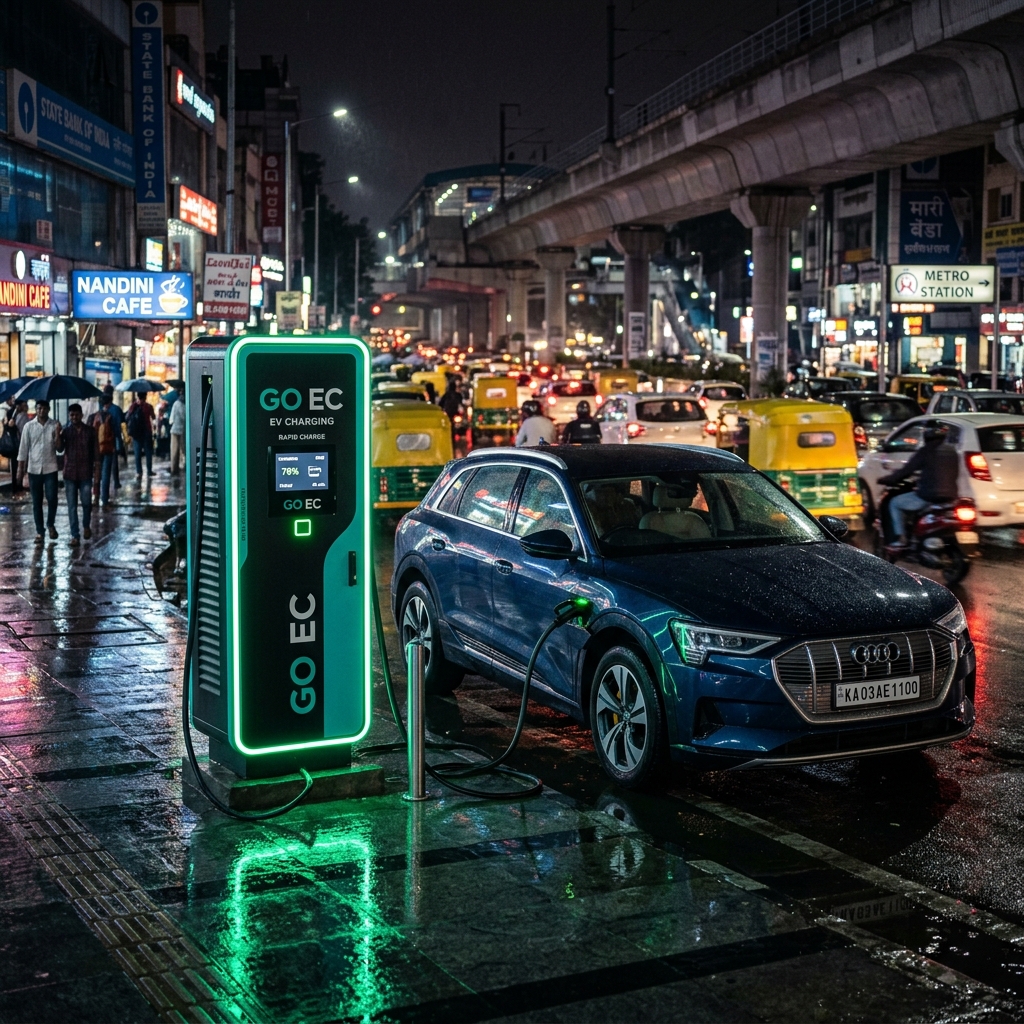
The True Cost of Charging an EV in India
As India accelerates its transition to electric mobility, one of the most common questions prospective buyers have is: "How much will it actually cost to charge my electric vehicle?"
The answer depends primarily on where you charge your vehicle: at home, or at a public fast-charging station.
1. Home Charging (AC Charging)
Charging at home is the most cost-effective way to power your EV. Domestic electricity rates vary by state, but on average, residential tariffs range from ₹5 to ₹8 per unit (kWh).
- Average EV Battery Capacity: 30 kWh (e.g., Tata Nexon EV)
- Cost per unit: ₹7
- Total cost for a full charge: 30 x 7 = ₹210
- Estimated range: ~250 km
- Cost per km: ₹0.84
2. Public Fast Charging (DC Fast Charging)
When you're on a highway or need a quick top-up, public DC fast charging is the way to go. CPOs (Charge Point Operators) like GO EC invest heavily in infrastructure, so public charging tariffs are higher than residential rates.
- Average DC Fast Charging Tariff: ₹18 to ₹24 per unit (kWh)
- Total cost for a full charge (30 kWh): ~₹600 to ₹720
- Cost per km: ₹2.40 to ₹2.88
Even at public charging rates, running an EV is significantly cheaper than a petrol vehicle, which averages around ₹6 to ₹8 per km.
Hidden Costs and Savings
When calculating charging costs, also consider the Time of Day (ToD) tariffs introduced by several state electricity boards. Charging during off-peak hours (typically late at night) can reduce your electricity bill further.
Conclusion
Running an EV in India offers substantial savings. A mix of 80% home charging and 20% public fast charging yields an unbeatable cost of ownership, making EVs not just an environmentally friendly choice, but an economically sound one.